The Poetic Backbone of 'Five to One'
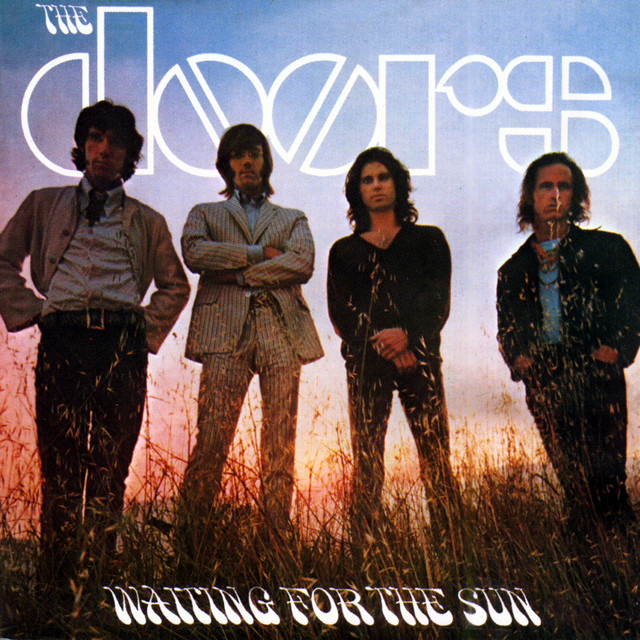
Released in 1968 on the album Waiting for the Sun, 'Five to One' stands as a testament to Jim Morrison's ability to weave poetry into rock music. The song captures the fervor of a generation grappling with societal upheaval, reflecting Morrison’s proclivity for provocative imagery and existential musings.
Rebellion and Control
The opening lines set the tone for a confrontation with authority. Morrison's lyrics pulsate with defiance, encapsulating the spirit of rebellion that defined the late '60s. The phrase “Five to one, baby, one in five” suggests a desperate struggle, an acknowledgment of the odds stacked against the individual, but also a rallying cry for change.
"Five to one, baby, one in five"
This line immediately positions listeners within a context of conflict, where the majority is represented as an oppressive force. Morrison’s background in poetry shines through as he uses stark numerical imagery to convey a stark reality—the odds may be against the individual, but the implication is that the fight is worth it.
A Study of Duality
Morrison's fascination with duality plays a crucial role in the song's emotional weight. The verses oscillate between the chaos of the outside world and the introspective nature of the self. The line “The old get old, and the young get stronger” captures this duality perfectly, highlighting the cyclical nature of life and the inevitable passage of time. It’s a reminder that while the establishment may seem unshakeable, there’s always a new generation ready to challenge the status quo.
Spoken Word Meets Rock
Morrison's spoken word approach to delivery in 'Five to One' amplifies the track's impact. Influenced by his poetry, the rhythm and cadence of his vocal lines are as vital as the accompanying instrumentation. The song’s driving beat, characterized by Robby Krieger’s gritty guitar riff and John Densmore’s relentless drumming, complements Morrison’s vocal intensity, creating an almost hypnotic experience.
Lyricism as Prophecy
In 'Five to One', Morrison crafts a narrative that feels prescient. The line “You’re a rich little girl, you’re a poor little girl” not only speaks to the socio-economic divides of the time but also foreshadows the ongoing struggles for equality. Morrison’s ability to distill complex societal issues into concise, impactful phrases is a hallmark of his writing style, and in this song, it culminates in a powerful call to action.
"You’re a rich little girl, you’re a poor little girl"
Legacy of Influence
The influence of Morrison’s poetry can be traced not only through the music of The Doors but across generations of artists. Tracks like 'Five to One' have inspired countless musicians to embrace lyrical depth, often merging literary elements with rock's raw energy. Morrison’s distinctive voice and poetic prowess paved the way for future songwriters to explore the interplay between personal expression and broader social commentary.
Conclusion: The Enduring Power of Morrison's Words
'Five to One' is more than just a song; it’s a manifesto of rebellion and a reflection of the human condition. Jim Morrison’s poetic prowess transforms it into something that resonates across decades, proving that music can be both a form of art and a vehicle for change. As we continue to grapple with the complexities of our own times, Morrison’s words remain as relevant as ever.
Interesting fact: Jim Morrison was heavily influenced by poets such as Arthur Rimbaud and Friedrich Nietzsche, which shaped his unique lyrical style.