The Sound of Love in a Changing Era
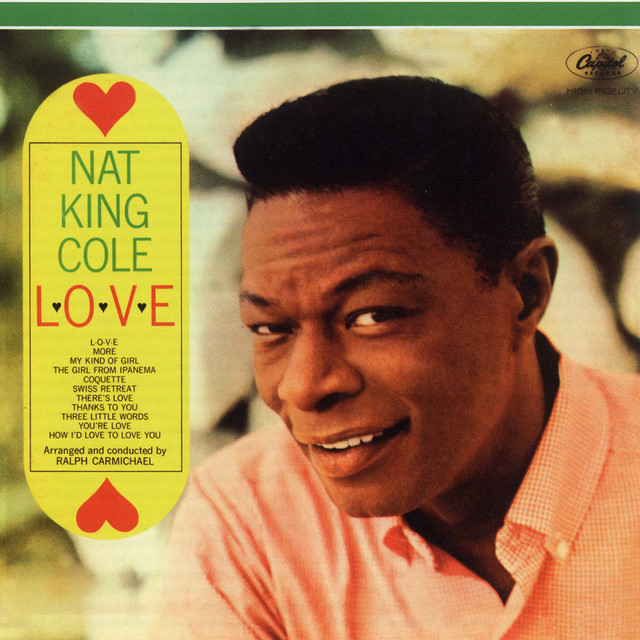
In 1965, amidst the social upheaval and cultural shifts of the 1960s, Nat King Cole released his final studio album, L-O-V-E. The title track, co-written by Bert Kaempfert and Milt Gabler, stands as a timeless ode to romance, perfectly capturing the essence of a decade that was both revolutionary and deeply sentimental. The song's lush orchestration and Cole's velvety vocals present a vision of love that feels both intimate and grand.
A Melodic Celebration of Affection
The arrangement by Ralph Carmichael complements Cole's smooth delivery, creating a backdrop that feels like a warm embrace. The simplicity of the lyrics, spelling out 'L-O-V-E,' transforms a straightforward declaration into something much more profound. It reflects a time when romance was celebrated in public life, despite the undercurrents of change.
"L is for the way you look at me, O is for the only one I see..."
These opening lines set the tone for a song that is both personal and universal. The playful structure of spelling out love mirrors the innocence and excitement of new relationships, resonating with a generation eager to express their feelings amidst a backdrop of political activism and social change.
Romance as Resistance
The 1960s were marked by protests, civil rights movements, and a questioning of traditional values. Yet, in the midst of this turmoil, songs like L-O-V-E provided a necessary escape. Cole's romantic ballad became a soothing balm for a generation grappling with uncertainty, reminding listeners that love could still thrive against all odds.
Interestingly, L-O-V-E was the last album Nat King Cole released before his death in 1965, making it a poignant farewell to his fans.
A Lasting Impact
The influence of L-O-V-E extends beyond its initial release. Over the decades, it has been covered by numerous artists, from Frank Sinatra to Michael Bublé, each bringing their own interpretation to a song that has become synonymous with romance. Its timeless appeal lies in its ability to evoke feelings of nostalgia and longing, inviting listeners to reflect on their own love stories.
"E is even more than anyone that you adore..."
Such lines encapsulate the feeling of love transcending the mundane, elevating it to an almost spiritual experience. In a decade where love was often politicized, Cole's approach was refreshingly personal, making it all the more impactful.
Conclusion: A Love Story for the Ages
Ultimately, Nat King Cole’s L-O-V-E is more than just a song; it's a cultural artifact that encapsulates the romance of the 1960s. As listeners, we find ourselves drawn to a melody that not only defines an era but also speaks to the enduring power of love. In a time of change, Cole's heartfelt serenade reminds us that love, in all its forms, remains a constant worth celebrating.