The Legacy of Major Tom
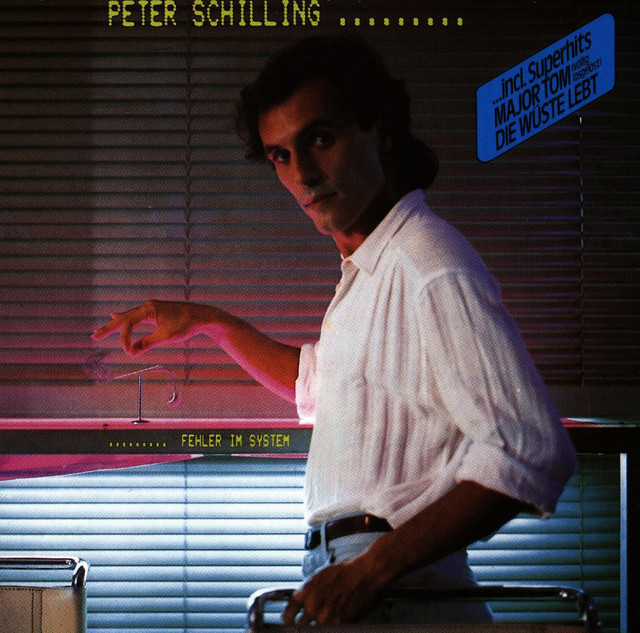
When Peter Schilling released "Major Tom (Coming Home)" in 1983, few could have predicted its lasting impact on the synthpop genre and its cultural resonance. The song is a continuation of the narrative established by David Bowie's "Space Oddity," yet it ventures into uncharted territory. Schilling's piece is not just a cover; it's a reimagining that reflects the anxieties of the Cold War era and the allure of space exploration.
A Cosmic Connection
Schilling, born Pierre Michael Schilling, was influenced by the themes of alienation and existential dread that permeated the music of the late 20th century. His version of Major Tom is a metaphor for disconnection, both from society and from oneself. The lyrics echo a familiar sentiment with lines like:
"And the stars are so far away, I feel like I'm on my own."
This sentiment mirrors the disillusionment pervasive in the early 1980s, a time when many felt adrift in a rapidly changing world.
German Synthpop and the New Wave Scene
Recorded in 1982 and featured on his debut album, "Error in the System," Schilling's track stands out in the burgeoning new wave scene. With its catchy synth lines and pulsating beat, it captures the essence of early 80s synthpop while retaining a distinctly German flavor. The production, characterized by layered synthesizers and a driving rhythm, was ahead of its time, pushing the boundaries of what pop music could achieve.
Schilling's "Major Tom (Coming Home)" charted in multiple countries, proving that the fascination with space was universal.
Drawing from Cultural Context
Schilling's fascination with space and science fiction is evident not just in this song but throughout his career. He often explored themes of alien life and the unknown, reflecting a broader cultural intrigue during the 1980s, as the space race and technological advancements captured public imagination. The imagery of an astronaut lost in space resonates with a generation grappling with fears of nuclear war and the unknowns of the future.
More than a Cover
While many listeners may initially dismiss "Major Tom (Coming Home)" as merely a tribute to Bowie's creation, Schilling's work is a thoughtful meditation on the character's journey. The line:
"This is Major Tom to Ground Control, I'm stepping through the door."
serves as a pivotal transition, demonstrating Major Tom's attempt to reconnect with humanity after his isolation. Schilling transforms this into a narrative of return, an almost nostalgic reflection on home and identity.
The Impact of Major Tom
The song's infectious chorus and memorable melody have solidified its place in pop culture, making it a staple in both retro playlists and modern covers. Schilling's interpretation has also influenced a myriad of artists across genres, highlighting the timelessness of Major Tom's story. The way he channels the character's journey speaks to an inherent human desire for connection, making it relevant even decades later.
A Modern Reflection
Today, "Major Tom (Coming Home)" resonates with a new generation, not just as a nostalgic anthem but as a commentary on modern disconnection in the digital age. The song's themes of isolation and searching for meaning in a vast universe still hold weight in our increasingly fragmented world. Schilling's work reminds us that, despite the distance that may separate us, the longing for connection is a universal experience.
The Final Frontier
In a time when space exploration is once again at the forefront of global conversation, Schilling's "Major Tom (Coming Home)" serves as a poignant reminder of the human spirit's quest for knowledge and belonging. As we look to the stars, we are reminded of the stories that bind us to our past and to each other.