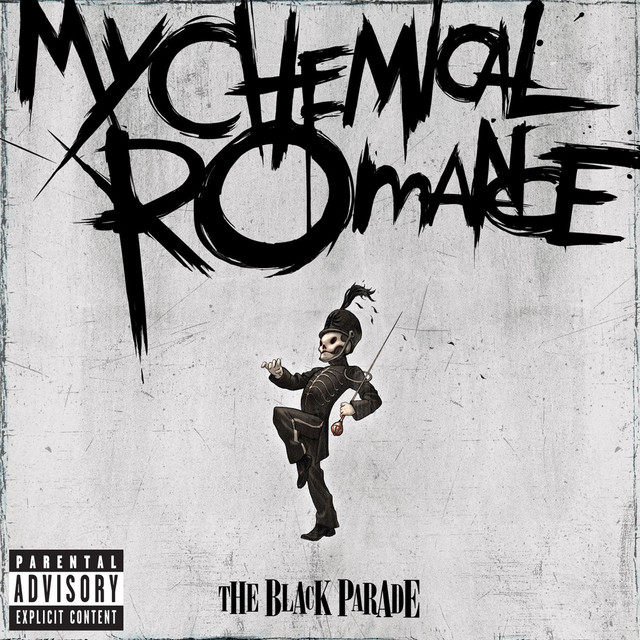
Echoes of the Past
My Chemical Romance's 'The End.' serves as a haunting conclusion to their third studio album, The Black Parade, released on October 23, 2006. This track encapsulates the overarching themes of mortality and reflection that permeate the album, but its roots can be traced back to the band’s early demos. The connection is subtle yet powerful, revealing how the band evolved while maintaining a core essence.
The Genesis of an Idea
Before The Black Parade defined a generation of emo and pop-punk, MCR was honing their craft with raw energy in their early demos. Songs from the I Brought You My Bullets, You Brought Me Your Love era showcased a different, more chaotic sound, yet the lyrical preoccupations with life, death, and identity were already present. Tracks like 'Vampires Will Never Hurt You' hinted at the theatricality that would later blossom into the grand narrative of The Black Parade.
Building a Concept
'The End.' presents a cohesive narrative, acting as a transition between life and death. Gerard Way’s exploration of mortality here is masterfully crafted, especially with the line:
"Now, I just want to be okay, be okay, be okay."
This sentiment echoes the angst and uncertainty found in early demos like 'Skylines and Turnstiles,' where the struggle for acceptance and understanding is a prominent theme. The urgency in both songs reflects a band wrestling with their identity amidst the chaos of their early years.
Musical Evolution
The arrangements in 'The End.' are orchestral and grand, a far cry from the raw punk sound of their debut. However, the emotional weight carried in the lyrics remains consistent. The climactic build-up in 'The End.' mirrors the frenetic energy of their earlier work, creating a bridge between the two phases of their artistry. The sweeping instrumentation enhances the lyrical delivery, showcasing how the band matured without losing their essence.
A Reflection on Themes
In the early days, My Chemical Romance often approached themes with a sense of urgency and despair. The lyrics from their demos frequently dealt with personal loss and existential dread, which culminate in 'The End.' The lyric:
"If life ain't just a joke, then why are we laughing?"
serves as a stark reminder of the dark humor threaded through their work, a hallmark of their style. This ability to blend humor with tragedy is a connecting thread that ties their early material to the mature reflections in The Black Parade.
Connecting the Dots
As MCR transitioned from their raw, punk roots to a more polished, conceptual sound, the through-line of their thematic concerns remained intact. 'The End.' stands not just as a finale to an album but as a culmination of the band’s journey. The introspective nature of the track can be seen as a matured echo of the struggles portrayed in their demos.
The Legacy of My Chemical Romance
Years after its release, 'The End.' continues to resonate with fans, much like the early demos that first captured their hearts. The connection between these periods highlights a band constantly evolving yet grounded in their foundational themes. As they prepare to celebrate their legacy, the contrast between their early sound and the grandeur of The Black Parade remains a testament to their growth.
Interesting fact: 'The End.' was recorded with renowned producer Rob Cavallo, who helped shape the distinct sound of The Black Parade.
Ultimately, My Chemical Romance’s ability to maintain a cohesive narrative across their discography is what solidifies their place in rock history. 'The End.' encapsulates the journey from chaos to clarity, demonstrating that even in their most polished work, the spirit of their early demos endures.