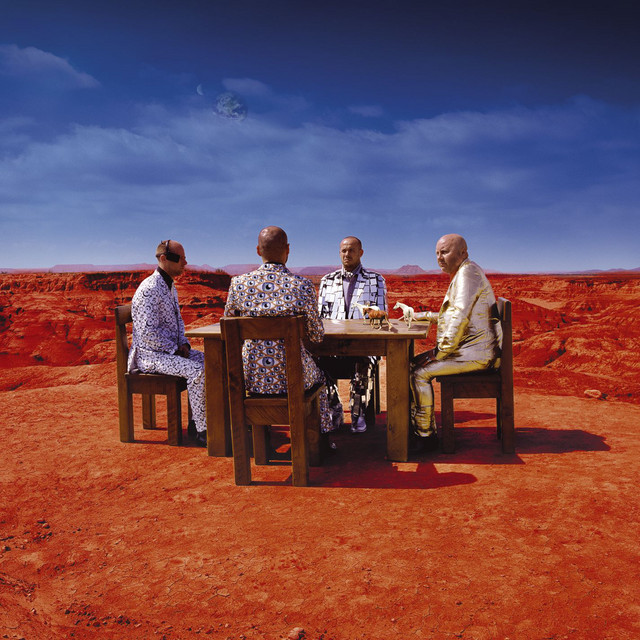
The Dystopian Soundscape of Knights of Cydonia
When Muse released "Knights of Cydonia" in 2006 as the closing track of their album Black Holes and Revelations, they didn't just create a song; they crafted an anthem for a generation grappling with uncertainty. The track’s sweeping melodies and galloping rhythms conjure a sense of urgency and rebellion, perfectly encapsulating the anxieties of a post-9/11 world.
As dystopian narratives have proliferated across various media, Muse’s work stands as a musical reflection of societal fears. The song's lyrics suggest an impending confrontation, with lines like "No one's going to take me alive," stirring images of resistance against oppressive forces. This battle cry resonates powerfully in an era where disillusionment with authority is rampant.
Interestingly, "Knights of Cydonia" has often been interpreted as a critique of political structures, making it a favorite at protests and rallies across the world.
The Rise of Dystopian Themes in Music
The past two decades have seen an exponential rise in dystopian themes across music genres. From the grim realities portrayed in Billie Eilish's work to the apocalyptic imagery in Hozier's lyrics, artists are increasingly drawing upon a shared cultural narrative of dread. This trend is not merely coincidental; it reflects a world increasingly defined by climate change, political strife, and social inequality.
In this context, "Knights of Cydonia" serves as a rallying point. The expansive instrumentation, combined with the haunting background vocals, supports the notion of a collective fight against a faceless enemy. Muse's ability to blend rock with orchestral elements creates a sound that feels both grand and urgent, echoing the chaos of dystopian realities.
The Cinematic Quality of Dystopia
Muse has always had a flair for the dramatic, and "Knights of Cydonia" is no exception. The song’s structure resembles that of a film score, building tension before releasing into a climactic finish. This cinematic quality aligns with the modern fascination with dystopian storytelling, where visuals often accompany narratives of despair.
Lines like
evoke the spirit of rebellion, drawing parallels with films like Children of Men and Blade Runner, where protagonists struggle against oppressive regimes. The music itself becomes a soundtrack for the fight against dystopia, and listeners find solace in its defiance."We're not a part of your system"
Connecting to the Present
As we continue to navigate a world that feels increasingly dystopian, "Knights of Cydonia" remains relevant. In a time when misinformation spreads like wildfire and the specter of authoritarianism looms large, the song’s call to arms resonates with a sense of urgency. Its legacy is not just that of a popular rock anthem; it’s a clarion call for action, echoing through the chambers of modern music.
Moreover, the song's enduring popularity, evidenced by its frequent inclusion in live sets and cultural references, underscores its significance as a cultural artifact. It taps into a collective consciousness that recognizes the fragility of freedom and the necessity of resistance.
"Knights of Cydonia" was voted the number-one song in a 2008 poll by Rock Sound, emphasizing its impact on the rock genre and beyond.
A Legacy of Dystopian Discourse
Ultimately, Muse’s "Knights of Cydonia" serves as a powerful reminder of the role music plays in reflecting and shaping societal narratives. It captures a moment in time yet transcends it, becoming a symbol of the ongoing struggle against dystopia. As artists continue to explore these themes, Muse stands at the forefront, illustrating how rock music can challenge the status quo and inspire a generation to rise against oppression.