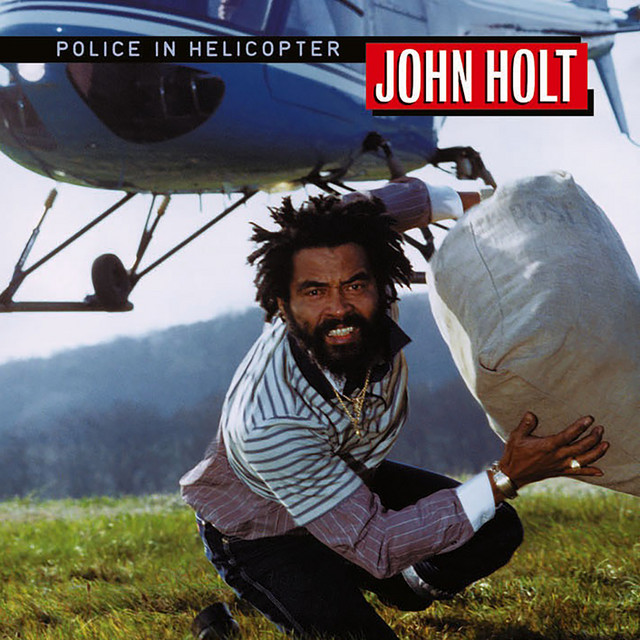
The Sound of Resistance
Released in 1979, John Holt's "Police In Helicopter" stands as a fierce critique of the Jamaican government's aggressive stance on marijuana cultivation. In the turbulent 1970s, Jamaica was caught in a whirlwind of political unrest, economic challenges, and social upheaval. Holt’s reggae rhythms and poignant lyrics shine a light on a community's struggle against oppression.
A Personal Connection
The album cover tells a harrowing story: Holt appears seriously wounded, a testament to the personal stakes involved in this struggle. He had been shot in a confrontation with police, with his wife arrested during the chaos. This personal narrative runs parallel to the broader social issues at play, making the song not just a commentary, but a reflection of Holt's own experiences.
Lyrics as a Call to Action
The lyrics of "Police In Helicopter" are stark and unforgiving, painting a vivid picture of fear under government authority. Holt's declaration that “the police in helicopter” are “looking for the ganja,” serves as both a literal and metaphorical statement of surveillance and control. This line captures the essence of a community under siege, where the government’s focus on marijuana eradication overshadows the broader societal issues at hand.
"Police in helicopter, looking for the ganja..."
Such imagery is powerful; it underscores the stark reality that many Jamaicans faced. The government was not just targeting drug users but was waging a war on a cultural practice deeply rooted in the island's identity.
Context of the Times
The late 1970s were a tumultuous period for Jamaica, marked by violence, poverty, and political corruption. The country was grappling with the fallout from economic mismanagement and social discontent. Amidst this turmoil, marijuana became a focal point for the government, leading to widespread crackdowns that affected countless lives.
Interestingly, the 1970s also saw a rise in the popularity of reggae music globally, with artists like Bob Marley and Peter Tosh becoming international icons. Holt’s work contributed to this movement, giving voice to the struggles of everyday Jamaicans.
A Broader Commentary
Holt's song serves as a commentary not just on drug policy but on the social injustices of the time. The lyrics convey a sense of urgency and desperation, reflecting a community that felt marginalized and oppressed. The repeated references to police presence highlight a pervasive atmosphere of fear and violence.
The Legacy of 'Police In Helicopter'
Today, "Police In Helicopter" remains a powerful anthem of resistance. It resonates with those who see parallels in contemporary struggles against authority and systemic oppression. Holt's ability to intertwine personal trauma with broader social issues makes the song timeless.
Conclusion: The Power of Music as Protest
John Holt's "Police In Helicopter" transcends the boundaries of music to become a vital piece of socio-political commentary. It captures the spirit of a time when reggae was not just entertainment but a voice for the voiceless. In an era of increasing governmental scrutiny and societal division, Holt’s lyrics remind us of the power of music to stand against injustice.