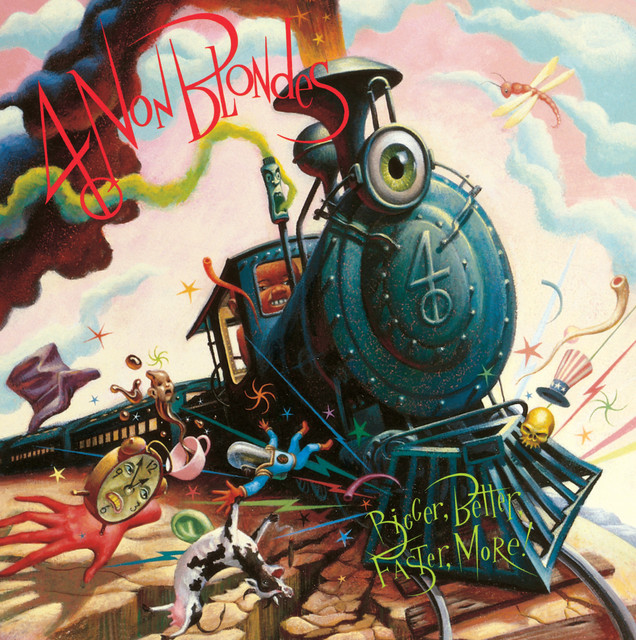
The Grunge Era’s Unlikely Anthem
When 4 Non Blondes released "What’s Up?" in 1993, it became a staple of the early '90s rock scene. The song, marked by Linda Perry's powerful vocals and raw emotion, is often viewed as a quintessential grunge anthem. However, its political context is often overlooked.
The band, formed in San Francisco in 1989, was emblematic of a time when sociopolitical issues were bubbling beneath the surface of mainstream music. The early '90s, marked by economic uncertainty and the looming threat of war, created a fertile ground for songs that questioned the status quo.
A Cry for Change
Perry's lyrics reflect a disillusionment that was palpable during this era. Lines like
echo the frustrations many felt towards societal structures that seemed unyielding and oppressive. The 'institution' she refers to can be interpreted as a critique of not just governmental systems but also societal expectations."And I try, oh my God do I try / I try all the time in this institution"
The song's chorus, with its hauntingly repeated question, "What’s going on?", captures a sense of yearning for clarity in tumultuous times. This was during a period when issues like the Gulf War and domestic economic strife were front and center in the American psyche.
Voicing the Voiceless
Moreover, Perry's delivery plays a crucial role in conveying the song's urgency. Her raspy yet passionate voice serves as a vehicle for the frustrations of an entire generation who felt marginalized in a rapidly changing world. The song became an anthem for those seeking answers, a rallying cry for individuals feeling lost in a complex society.
Interestingly, Linda Perry later became a successful songwriter and producer, working with artists like Christina Aguilera and Pink, further amplifying her voice in the music industry.
Feminism and Identity
4 Non Blondes was also one of the few all-female bands to achieve significant commercial success in a male-dominated industry. Their presence challenged gender norms within rock music, paving the way for future female artists. Perry's lyrics often touch on themes of personal struggle and empowerment, which resonate with feminist ideals.
In a way, "What’s Up?" serves as a bridge between the personal and the political — a call not just for social change but also for self-acceptance. The line
is not just a question directed at the world; it’s a plea for introspection and awareness."I said, hey, what’s going on?"
Legacy of 'What's Up?'
Despite its upbeat melody, the song carries a heavy message that continues to feel relevant today. It’s a reminder that music can serve as a powerful tool for social commentary, capturing the zeitgeist of its time. In a world where political and social issues remain contentious, "What’s Up?" stands as a timeless anthem of questioning and resilience.
4 Non Blondes may have faded from the limelight, but their impact remains. The song is not just a nostalgic hit; it’s a reflection of a generation grappling with its identity and the world around it. The unexpected political context behind "What’s Up?" enriches our understanding of its significance and reaffirms that music is often a mirror reflecting societal truths.